

Liège waffles are the most decadent of waffles. They are made from buttery, rich brioche dough waffled until crispy and studded inside and out with Belgian pearl sugar.


I cannot claim this is a traditional Liège waffle recipe. But these waffles are made with my lightest, fluffiest brioche dough. They cook up buttery, soft and airy on the inside, lightly crispy and chewy on the outside with crunchy “pops” of caramelized sugar.

This recipe incorporates tangzhong into the dough. Tangzhong is a cooked roux of flour and water that is used in many fluffy, soft Asian breads (like Japanese Milk Bread). Although, it is not necessary to use tangzhong in a crispy Liège waffle (in fact, I think it is unheard of), I find it helps make these waffles wonderfully soft and feathery inside. Tangzhong also promotes a longer shelf life, so your Liège-style waffles won’t immediately go stale and dry. As I said, this recipe is not traditional, but it’s very good.
For some helpful tips before you begin, click here. (Recommended)
Make 16 4 1/2-inch Liège waffles.
INGREDIENTS:
Tangzhong:
- 6 tablespoons (90 ml) water
- 2 tablespoons (16 g) bread flour
Dough:
- 1/4 cup (60 ml) water
- 1/4 cup (50 g) sugar, divided
- 1 1/2 teaspoons (5 g) active dry yeast
- 3 large eggs
- 1 1/4 cups (150 g) all-purpose flour
- 1 1/4 cups (162 g) bread flour
- 1/4 cup (31 g) powdered milk
- 1 teaspoon (6 g) fine salt
- 1/2 cup (1 stick or 113 g) unsalted butter, softened
- 1 1/4 cups (8 oz. or 226 g) Belgian pearl sugar (See TIPS)
- extra flour, for dusting
- stand-mixer with paddle and dough hook attachments
- parchment paper, cut into 16 3×3-inch squares
- waffle-maker, preferably non-stick
- tongs
- cooling rack
INSTRUCTIONS:
1. MAKE THE TANGZHONG.
– In a small pan, over medium-high heat, combine water and bread flour for the tangzhong.
– Whisk constantly until thick and smooth like pudding, maybe 3 or 4 minutes.
– Pour into a small bowl and refrigerate to cool while gathering the remaining ingredients.
2. ACTIVATE THE YEAST.
– Warm the water to about 110°F (49°C). (Slightly warm to touch.)
– In a small bowl, stir together the warm water, 1 tablespoon (12.5 g) of the sugar and the yeast.
– Let sit for 5 to 10 minutes, until foamy.
3. COMBINE THE INGREDIENTS.
– In the bowl of a stand mixer, briefly whisk together the all-purpose flour, bread flour, the remaining sugar, powdered milk and salt.
– Add the foamy yeast mixture, the cooled tangzhong and the eggs to the flour mixture.
– Stir with a wooden spoon until the flour has been absorbed and a shaggy dough forms.
4. KNEAD THE DOUGH UNTIL SMOOTH AND ELASTIC.
– Using a stand mixer, knead the dough with the paddle attachment on low speed (setting #2) for about 30 seconds to a minute to bring the ingredients together.
– Increase to medium-high speed (setting #4) and knead until the dough transforms into a smooth, glossy, batter-like dough that pulls away from the sides of the bowl in sticky strands, about 10 minutes.
- The dough will be very soft and sticky, but should also be smooth, springy and elastic enough to stretch thin enough to let light shine through without tearing. (See TIPS.)
5. GRADUALLY ADD THE BUTTER.
– Switch to the dough hook attachment. On low speed (setting #2), begin adding the butter a few tablespoons at a time, waiting for each addition to be incorporated before adding the next.
– Stop and scrape down the sides of the mixer as needed until all the butter is added and absorbed.
– Once all the butter is added, increase speed to medium-high (setting #4) and knead the dough for 5 more minutes until the dough is silky smooth and trying to pull away from the sides of the bowl and cling to the hook.
- The dough will be very soft, smooth and a little bit jiggly.
6. LET THE DOUGH RISE UNTIL ABOUT DOUBLE IN VOLUME. (FIRST RISE)
– Scrape the dough into a large, lightly greased bowl.
– Smooth the top as much as you can.
- With such sticky dough, here’s one way to do this: With greased hands, slide fingers under the dough from each side and lift. Allow the weight of the overhanging dough to stretch and smooth the surface. Set the dough back down. Turn the bowl 90 degrees and repeat until the top is nice and smooth.
– Cover the dough with plastic wrap and let rise for 1 to 2 hours or until double in size.
7. PUNCH DOWN THE DOUGH, RESHAPE AND REFRIGERATE OVERNIGHT. (SECOND RISE)
– Once the dough has doubled in volume, punch it down (with lightly greased hands) to release all the built up gases.
– Reshape the dough so that the top is smooth.
– Cover with plastic wrap and place it in the refrigerator.
– Let the dough rest in the refrigerator overnight, or for up to 3 days. (Any longer than 3 days and the dough may begin to smell “yeasty”.)
Punch down the dough as needed.
– You may need to punch down the dough once or twice as it continues to expand in the bowl.
– After punching the dough down, reshape, cover with the plastic wrap and return to the refrigerator.
- As the dough becomes more stiff, reshape the dough by pulling up the sides and folding them into the center, gathering the dough into a ball. Flip the dough ball so that the top is smooth.
8. ADD THE PEARL SUGAR, SHAPE THE DOUGH INTO DOUGH BALLS AND THEN REST THE DOUGH. (THIRD RISE) (SEE TIPS)
– When ready to make the waffles, have the parchment paper squares ready.
– Remove the dough from the refrigerator and turn out onto a well-floured surface.
– Roll the dough out into a rough rectangle about 1/2-inch thick.
- Dust lightly with flour as needed and roll with a light touch. This should help with any stickiness.
- Flip the dough occasionally and lightly dust with flour to make sure it’s not sticking too much. (Brush off any excess flour.)
– Sprinkle about two-thirds of the pearl sugar evenly on the dough (all the way to the edges). Press the sugar into the dough and roll up jelly-roll style. (Use a pastry scraper or flat spatula if the dough is sticking to the counter.)
– Press the remaining pearl sugar evenly around the outside of the rolled up dough.
- Dust hands lightly with flour as needed.
– Divide the dough into 16 pieces. Form into balls and place each on a parchment paper square. (Each piece will be between 60 g to 65 g.)
– Loosely cover the balls of dough with lightly greased plastic wrap and a towel.
– Let the dough sit and proof for about 60 minutes, until soft and puffed.
- Test if the dough is ready: Wet your finger and lightly poke the dough. The dough has been proofed enough when the indentation from your finger slowly bounces back only halfway.
9. COOK THE WAFFLES. (SEE TIPS)
– Preheat the waffle maker to medium – no hotter than 360°F(182°C). (No need to grease the waffle maker if it is nonstick and in good condition.)
– Use the parchment paper to place a ball of dough on the waffle maker. Peel off the paper and cook according to the waffle maker’s instructions, until the waffles are cooked through and deep golden brown, between 6 to 10 minutes. (If you have an instant read thermometer, the waffles are done anytime after they reach an internal temperature of 190°F (88°C).)
– Carefully transfer the waffle with tongs or a fork onto a cooling rack. They will be hot from molten sugar.
– Repeat with the remaining balls of dough, adjusting the temperature of the waffle maker and the amount of cooking time, if needed.
10. KEEP THE LIEGE WAFFLES WARM UNTIL READY TO SERVE.
– Keep the waffles warm on a rack over a baking sheet in a 200°F (93°C) oven if you plan to eat them right away.
- The waffles will start off soft, but as they cool a bit, the molten sugar will harden into a crunchy shell.
- These waffles are best when eaten warm, but are really good at room temperature, too.
Serve plain or adorned:
– These are delicious served plain, but can always be served with:
- powdered sugar
- maple syrup
- melted chocolate
- fruit
- Crème Anglais
- Praline Gianduja (Think “Nutella” but with lovely notes of caramel.)
Store at room temperature or freeze.
– Store at room temperature in an air-tight container for a few days.
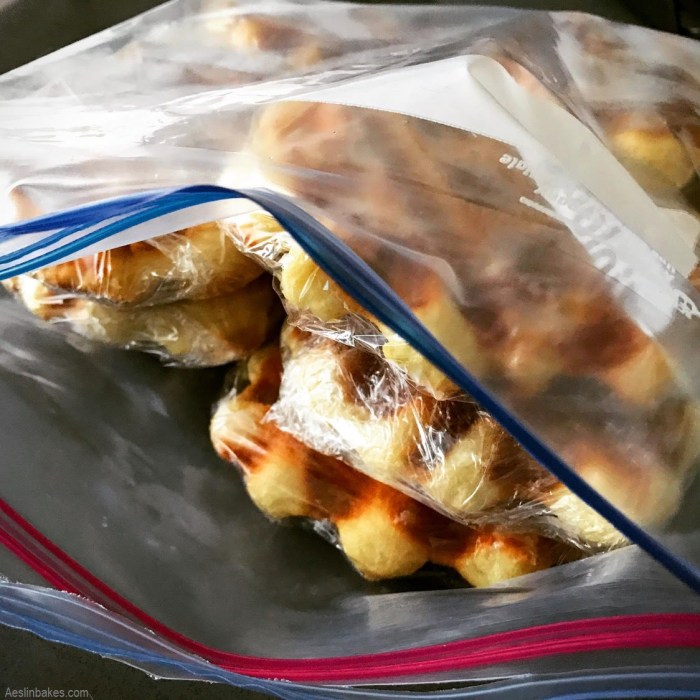
– If you know you won’t be eating the Liège waffles right away, it is best to freeze them. Wrap fully cooled waffles securely in plastic wrap and then place in Ziploc-type freezer bags in the freezer for up to a month.
Reheat leftover or frozen Liège waffles.
– Reheat the waffles at 275°F (135°C) on a rack over a baking sheet for 5 minutes for room temperature waffles or 8 minutes for frozen waffles, until completely heated through and the sugars have re-melted.
– Keep warm at 200°F (93°C) until ready to serve.


*****

ABOUT THIS RECIPE
Liège waffles are made of light, buttery, soft brioche, waffled until crispy with bits of caramelized sugar. They are meant for leisurely weekend mornings, to be eaten while lingering over hot coffee, tea or cocoa.
They take a bit of time to prepare. Don’t be intimidated or put off by that. Most of this time is spent resting the dough. Just give yourself enough time to enjoy the process. Start the night before and then allot enough time the next day for shaping, proofing and cooking the waffles. (Aside from the overnight rest, allow about 2 to 3 hours each day, including resting and cooking time.)
*****
Why use tangzhong? It helps the dough retain moisture. This makes the waffles fluffier and softer inside and keeps them from going stale or dry. And it’s just one little extra step.
Also, don’t take shortcuts or skimp on the resting times. All the time that the dough spends resting and proofing goes toward developed flavor and a lighter, softer texture.
*****
For more weekend baking, try these Soft Cinnamon Rolls (Tangzhong) or this Fluffy Brioche Wool Roll Loaf filled with Praline Gianduja.


TIPS:
Here are 7 helpful tips:
1) It’s not a Liège waffle without Belgian pearl sugar:
– I recommend NO SUBSTITUTIONS for Belgian pearl sugar. Using anything other than that may not give you the desired results, which would be a waste of your beautiful brioche dough and could be disastrous for your waffle maker.
- I get my Belgian pearl sugar from Amazon. (Although I was once fortunate enough to find it in one of my local grocery stores!)


- Do not confuse Belgian pearl sugar with Swedish pearl sugar. Swedish pearl sugar is much smaller in size and may melt in your dough, making it homogenously sweet instead of giving you “pops” of sugar. It also cannot withstand high cooking temperatures as well as Belgian pearl sugar and is more likely to burn, not just on your waffles, but on your waffle maker, too.
- There are some recipes that say you can make pearl sugar out of sugar cubes. I have never tried this and hesitate to try. I worry they would melt too quickly and burn.
2) Making the dough:
– A little preparation ensures things go right.
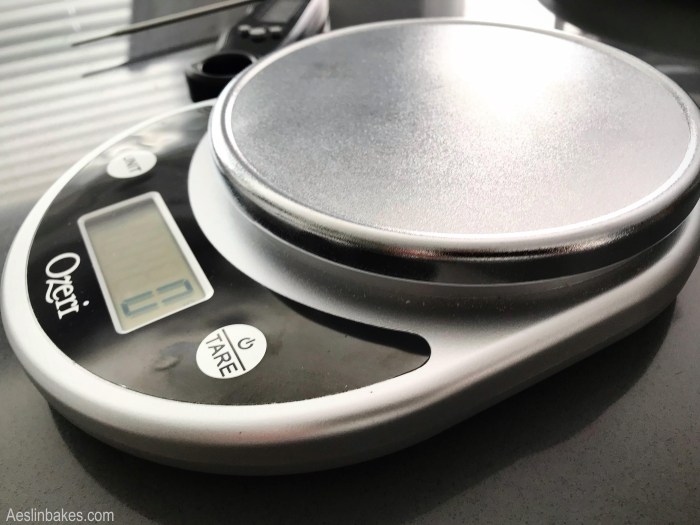
Use a scale if you have one:
- Weight measurements are more accurate than volume measurements and best for consistent results. It’s worth the minor investment.

Cool the tangzhong:
- Make sure your tangzhong is cooled. Too hot, and it will harm the yeast.

Make sure the yeast is active:
- Activate the yeast in the warm sugar water. If the yeast does not become foamy within 5 to 10 minutes, throw it out and start again.

Soften the butter:
- The butter will incorporate into the dough best when it is softened.
- To soften butter quickly, I cut it into small cubes or very thin pats. After a few minutes, I mash it with the back of a spoon until it is smooth and spreadable.

3) KNEADING THE DOUGH:
– Proper kneading is necessary for the brioche dough to cook into waffles that are light and feathery-soft inside and that won’t shrink or collapse and become dense as they cool. Even though brioche dough is very soft, it should still be smooth and elastic enough to be stretched until light can shine through without tearing (the windowpane test).
- This brioche dough is not like typical bread dough. It may seem more batter-like rather than doughy. But when kneaded enough, it can still be stretched into a thin, translucent membrane.

If your dough didn’t pass the “windowpane” test:
– If you have kneaded for the allotted time but your dough is not passing the windowpane test, don’t stress.
- Rest your dough for 10 minutes (and up to 30 minutes) then test again. (It’s amazing what a little rest can do for dough’s smoothness and elasticity.)
- If the dough is still not smooth and elastic, knead for 3 minutes more and then re-test.
- Repeat, if needed, until the dough passes the windowpane test.
Do not add flour:
- Brioche dough is very soft and sticky. That’s how it should be. Don’t add any extra flour. That will just weigh down your brioche. The dough will be firmer and much easier to work with after a night in the refrigerator. (It will also taste better, so don’t skip the overnight rest.)


Do not over-knead:
- If you start to feel the dough becoming firm and less stretchy, stop kneading or else you risk over-kneading your dough. Over-kneaded dough will cook up dry and dense with a hard crust.
4) Shaping and pROOFING THE DOUGH:
– When adding the Belgian pearl sugar and shaping the dough, don’t be alarmed if the dough is a bit sticky (especially if your kitchen is warm). Just dust lightly with flour as needed and use a light touch.
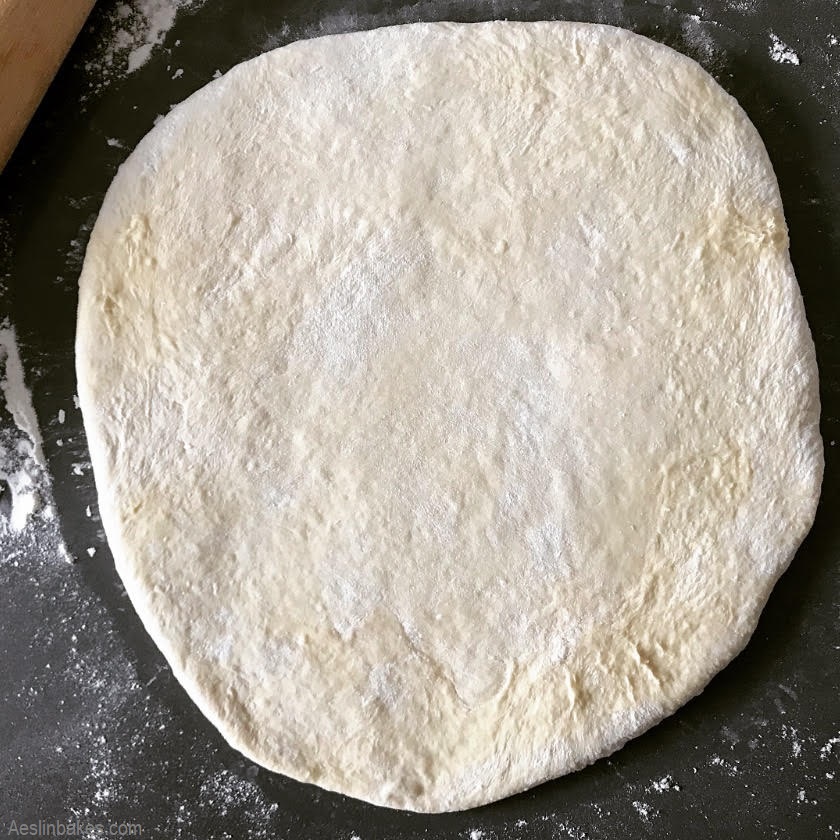
– Once you have added the Belgian pearl sugar and shaped the dough into little dough balls, let them rest and proof until they are puffed, about an hour. They won’t quite be double in volume, but they will be puffed enough that you can poke the dough and the indentation will slowly bounce back only halfway.
- Don’t rush it. Otherwise, your waffles may collapse, shrink or become dense once they cool.


5) COOKING THE WAFFLES:
– Waffle makers vary, so cooking times will vary, too. Generally, you want to cook your waffles until they are deep golden brown and the sugars have caramelized.
- Just be sure to keep your temperatures moderate – no hotter than 360°F(182°C). You don’t want burnt sugar on your waffles, or on your waffle maker.
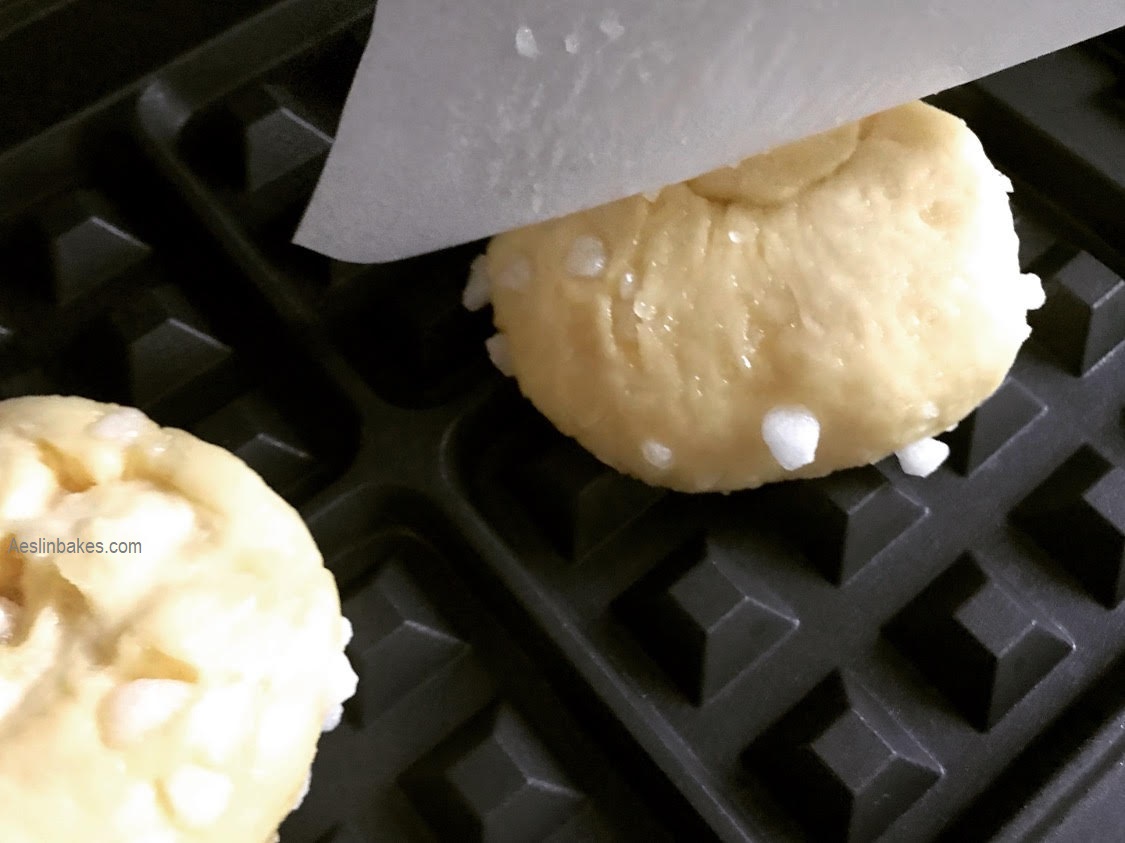

– If your waffle maker is like mine, you can cook 2 waffles at a time. You can try to squeeze more than 2 waffles into your waffle maker, which may save you time. But you will miss out on more waffle surface area covered in molten sugar.

If sugar is burning while cooking the Liège waffles:
– In my experience, Belgian pearl sugar has never burned on my waffle maker plates. Rather, it melts and then turns crumbly, sticking to the next waffle (which is heavenly). Even through entire batches of waffles, the color of the sugar never went darker than the color of butterscotch.
- If the sugar is burning, check to make sure your temperature is not set hotter than 360°F(182°C).
- If the temperature is not the issue, check to make sure you really are using Belgian pearl sugar and not some other type of sugar.
6) Two ways to save on cooking time:
– Cooking waffles is time-consuming. Although there are no shortcuts in the preparation of these waffles, there may be ways to save on the cooking time.
- Shorten your time with the waffle maker by prepping and cooking only the number of waffles you need.
- Make, cook and freeze waffles ahead of time.
Cooking Liège waffles in smaller batches:
– Brioche dough can stay in the refrigerator for up to 3 days. So if you wish, divide the dough in halves or thirds for batches of 8 or 5 waffles over 2 or 3 days. Knead in the proper amount of Belgian pearl sugar for each batch when you’re ready to cook them. For individual waffles, simply weigh out about 50 g (a little more than a 1/4 cup) of dough per waffle and fold in about 15 g (almost 2 tablespoons) of Belgian pearl sugar. Let rest and proof for about 60 minutes or until puffed and then cook.
- Knead the Belgian pearl sugar into the dough only when you’re planning to actually cook the waffles. I do not recommend kneading in all the Belgian pearl sugar and then letting the dough sit in the refrigerator. As the dough sits, the sugar just melts into your dough, making it wet and sweet. And it doesn’t crisp up as well.
- Use all the dough by Day 3 before the dough begins to go “yeasty”.
Freezing and reheating Liège waffles:
– While nothing beats freshly made Liège waffles, these waffles are still amazing even after being frozen. And having some made and ready in the freezer is really the next best thing. You don’t need to knead in the pearl sugar, wait for proofing or spend any time with the waffle maker. It may even be worth making a large batch just to freeze for Liège waffles on demand!
- To eat at room temperature, just thaw for about 30 minutes or so while still wrapped .
- If reheating, there’s no need to thaw first. Just unwrap and place the Liège waffles on a rack placed over a baking sheet in an oven preheated to 275°F (135°C). Heat them up until they are fully hot and the sugars have re-melted, about 8 minutes. (It shouldn’t be long enough for the waffles to brown any further.) The Liège waffles will crisp up as they cool down a bit and the sugar re-hardens.
– These waffles can be frozen as soon as they are completely cooled. In fact, it’s best to freeze them the same day.
7) How to clean your waffle maker:
– First, check your manufacturer’s instructions for cleaning.
– Otherwise, if your waffle maker has removable plates, simply soak them in super hot water. Any residual sugar should melt right off. If the plates are not removable, dampen a microfiber cloth in hot water and let it sit on the sugar-covered griddle for half an hour or so. That should soften the sugar enough to wipe it away. Avoid abrasives.
*****


*****
Related Recipes
Soft & Airy Brioche (Tangzhong)


Soft & Airy Pandesal (Tangzhong)

Click here for more BREADS recipes!
–
–
–
Caramelized sugar’s wonderful sweet complex flavor comes from the Maillaird reaction. Learn about the Maillard reaction:
https://www.seriouseats.com/2017/04/what-is-maillard-reaction-cooking-science.html
–
–
–

