

Bagels. Mmm. Make your own. You can eat them fresh out of the oven when they are at their crispiest, chewiest and softest, to which no store-bought bagel can even come close. And thanks to the use of yudane, these bagels will stay soft, chewy and delicious even as long as some of your commercially-made bagels, but without the added preservatives.


These bagels are made using yudane, a Japanese method of slowly gelatinizing a portion of flour and water from the recipe. This helps the dough retain moisture, which then bakes into bagels that stay tender, chewy and fresh for longer.
But the main appeal of these bagels is not that they use yudane. It’s that they’re really good bagels with a chewy, crispy exterior, a tender interior with a tight crumb and flavor that can only come from a long, slow, cold rise.


To read more about this recipe and for some helpful tips before you begin, click here.
Makes 8 4-ounce bagels.
INGREDIENTS:
For the yudane:
- 120 g (1 cup) bread flour
- 120 g (1/2 cup) water
For the dough:
- 255 g (1 cup plus 1 tablespoon) water
- 5 g (1 1/2 teaspoons) instant or active dry yeast
- 15 ml (1 tablespoon) barley malt syrup
- 420 g (3 1/2 cups) bread flour
- 30 g (1/4 cup) powdered milk
- 12 g (2 teaspoons) salt
For the poaching liquid:
- 2 liters (almost 2 quarts) water
- 30 ml (2 tablespoons) barley malt syrup
- 10 g (2 teaspoons) baking soda
- 12 g (2 teaspoons) salt
Optional toppings:
- Sesame seeds
- Shredded or grated cheese (like Parmesan or Asiago)
Equipment:
- Stand-mixer
- Large baking sheet (at least 18×13-inch)
- Wide pot – like a Dutch oven or a deep wok
- Slotted spoon or spider skimmer
INSTRUCTIONS:
1. Make the yudane.
Make the yudane at least 4 hours ahead, preferably the night before. (See TIPS)
– Place the flour for the yudane in a heat-proof bowl.
– Bring the water for the yudane to a boil and pour over the flour. Mix well with a wooden spoon until combined and there are no signs of any dry flour.
– Let sit to cool and then cover with plastic wrap and refrigerate overnight.
- The yudane can actually be used in as little as 4 hours. But the longer the rest, the better the flavor and texture.
2. Activate the yeast.
– Heat the water to 110°F (43°C). (Just warm to the touch.)
– Stir the yeast and barley malt syrup into the water until the yeast is dissolved.
– Let sit for 5 to 10 minutes until foamy.
3. Combine the dough ingredients. Add in the yudane.
– In the bowl of a stand mixer, briefly stir together the flour, powdered milk and salt.
– Add the foamy yeast mixture and stir with a wooden spoon or spatula until most of the flour is mixed into a shaggy dough.
– Tear the yudane into pieces and disperse throughout the shaggy dough.
– With the dough hook attachment, mix on the lowest speed for 2 minutes, until it looks like the yudane has been completely combined with the rest of the shaggy dough.
4. Knead the dough until smooth and elastic.
– Increase the mixer speed to medium-high (#4) and knead for 10 minutes, until the dough pulls away from the sides and bottom of the bowl and gathers around the hook. The dough will be a bit sticky, but should be smooth, springy and elastic enough to stretch until almost translucent without tearing (the “windowpane” test). (See TIPS)
- This dough will be stickier than traditional bagel dough because of the yudane. This is how it should be. Do not add flour.
5. Let the dough rise until almost double in size, about an hour.
– Scrape the dough into a large, lightly greased bowl.
– With lightly greased fingers, pull up the sides of the dough and fold into the center. Do this a few times to gather the dough into a ball.
– Flip the dough ball so now the top is smooth and greased.
– Cover the dough with plastic wrap and let rise for about 1 hour or until almost double in size.
6. Punch down, reshape and place the dough in the refrigerator for a long, overnight rise.
– Punch down the dough and reshape into a ball.
– Place the dough back into the bowl, cover and place in the refrigerator.
– Let the dough rest in the refrigerator overnight (and up to 2 days).
- Punch down the dough once or twice during the overnight rise. Reshape into a ball, cover and place back into the refrigerator.
7. Divide the dough into 8 pieces and roll into balls. Let rest for 10 minutes.
– Roll the dough out onto a lightly floured surface and divide into eight even pieces. (Use a scale, if you have one. Each piece will be about 118 g.)
– Shape and roll the pieces of dough into taut, smooth balls. Lightly flour your hands, if needed.
- This can be done by taking a piece of dough and tucking it under itself, stretching the surface smooth. Then pinch the bottom sealed and lightly roll the bottom of the dough ball on the countertop to smooth over the seam.
– Cover with lightly floured plastic wrap. Let rest for only about 10 minutes.
- You can flour the plastic wrap by just laying it on top of your floured surface and pressing to pick up the loose flour.
8. Preheat the oven to 425°F (218°C). Prepare the baking sheet. Set out any toppings, if using.
Meanwhile, while the dough balls are resting:
– Preheat the oven to 425°F (218°C). Place the oven rack in the center position.
– Prepare a large 18×13-inch sheet pan by lining it with parchment paper and then lightly spraying it with cooking spray.
– Prepare and set out any toppings, if using, and place in shallow dish(es) nearby.
- Place dry toppings, like sesame seeds, in a wide and shallow bowl or dish, about 1 tablespoon per bagel.
- Grate cheese, if using. about 2 to 4 tablespoons grated cheese per bagel.
9. Prepare the poaching liquid. Shape the dough balls into bagels. (See TIPS)
– Place the 2 quarts of water in a wide pot along with the barley malt syrup, baking soda and salt. Bring to a boil over medium-high heat. When the water reaches a full boil, turn the burner down to medium.
- Keep an eye on the water and don’t let it boil over.
– Meanwhile, shape the bagel by lightly flouring your finger and poking a hole in the center of a dough ball.
– With lightly floured hands, gently stretch the dough ring until the hole is about the about 2 to 3-inches wide and place on the prepared baking sheet. Lightly flour your hands and the dough as needed as the dough may be a bit sticky.
– Repeat with the remaining dough balls.
– If the poaching liquid hasn’t begun boiling yet, cover the bagels with lightly floured plastic wrap while waiting.
10. Boil the bagels 1 minute per side. Dredge in toppings, if using, and place back on the baking sheet. (See TIPS)
– Prepare a plate with paper towels and keep it near to drain the bagels once boiled.
– Once the poaching liquid reaches a full boil, carefully and gently place 3 or 4 bagels into the pot. The bagels will expand a little, so don’t overcrowd the pot.
- Gently re-stretch the bagels with lightly floured hands before placing them in the boiling water if the holes have shrunk.
– Let boil for 60 seconds and then carefully flip the bagels over. Boil the second side for 60 seconds.
– Remove the boiled bagels with a slotted spoon or skimmer onto the paper towels to drain a bit before placing back on the baking sheet.
Toppings:
- If using dry toppings like sesame seeds, lightly dredge the tops of the still-wet bagels into the toppings. Then place the bagels, toppings side-up, back on the parchment paper lined baking sheet.
- If topping with shredded cheese, sprinkle on after placing back on the baking sheet.
11. Bake at 425°F (218°C) for 20 to 25 minutes.
– Bake in the preheated oven for 20 to 25 minutes, until deep golden brown.
– Cool on a cooling rack before slicing open.


Serve:
Serve while still warm or at room temperature.
- Eat bagels with butter, cream cheese, smoked salmon or lox, egg and cheese, peanut butter & jelly or whatever else you like. Bagels are so versatile.


STORING BAGELS:
At room temperature:
- Store completely cooled bagels in a paper bag folded shut nice and snug.
- Place the paper bag in a plastic bag or air-tight container and seal with as much air squeezed out as possible.
- It is best to eat your bagels within a week.
In the freezer:
When freezing bagels, the earlier, the better. The fresher your bagel is when frozen, the fresher it will taste when defrosted.
- Wrap completely cooled bagels individually in plastic wrap. If you wish, you may slice them in half first. Place a piece of wax or parchment paper between the slices.
- Place the wrapped bagels in a sealed Ziploc-style freezer bag. Freeze.
- It is best to eat your frozen bagels within 4 to 6 months.
REHEATING / TOASTING BAGELS:
To reheat or toast bagels:
- Toast whole bagels in a 400°F (204°C) oven for about 4 minutes, Less if your bagel is sliced in half.
- If frozen, thaw still-wrapped bagels at room temperature for about 30 minutes to overnight first. (Frozen sliced bagels don’t need to be defrosted first.)
OR
Place whole, still-frozen bagels directly on a rack wrapped in some foil in an oven for about 15 to 20 minutes.


*****

ABOUT THIS RECIPE
Bagels take a little time to make. (Mainly resting and rising time – which is also flavor development time.) But the wait will be worth it. Your bagels will be crisp and chewy on the outside, but tender on the inside with flavor that can only come with time and patience. And because of the yudane, they won’t immediately go dry, stale or hard. They will be chewy, soft and delicious longer than your average homemade bagel, even untoasted. But if you do toast them, don’t cut them open. Toast them whole. That way you can enjoy a warm crisp, chewy crust with the inside still tender and soft, just like on the first day.
What is YUDANE? (SKIP)
Yudane is a method of mixing boiled water with flour and letting it sit for an extended time to gelatinize. This is used in bread dough to retain moisture, delaying the staling, drying and hardening of bread, keeping it softer and fresher for longer. (This is similar to the Chinese method of tangzhong where flour and water are cooked into a gelatinous roux.)
I came upon the use of yudane in bagels from Stella Parks’ recipe for Magic Bagels: They Stay Fresh for Days. (Although her methods are characteristically more modern than mine.) Having been familiar with tangzhong and using it in much of my bread baking, I was already convinced of the potential benefits. However, tangzhong makes bread fluffy, light and airy – not what you want for bagels. Yudane, on the other hand, not only gelatinizes flour and water like tangzhong, but given enough time, it also develops flavor and builds up gluten. This makes yudane suitable for breads with a chewier texture, like bagels.
Shall we talk about the HYDRATION? (If no, then SKIP)
Basically, the hydration percentage in bread dough is the ratio of water to flour used. The more water, the more rustic the bread with a large, airy crumb and irregular holes (70% to 80% hydration for pizza crust and focaccia). The less water, the denser and tighter the crumb with smaller holes (60% to 70% for sandwich bread and 50% to 60% for bagels).
Some of you out there calculating the numbers may be surprised at how high the hydration is for these bagels. That’s true. Bagels should be 50% to 58% hydration. These bagels are at about 70%. That’s because of the addition of the yudane.
- Yudane and tangzhong take water from the recipe for gelatinizing with a portion of flour, leaving less water for the remaining flour to absorb and use for structure and texture building. As a result, extra water is needed for a bread dough with tangzhong or yudane to behave like a bread dough without it.
For example, below, both the focaccia on the left and the Soft Sandwich Milk Bread on the right have a high 80% hydration. But the sandwich bread dough uses some of its water for the tangzhong so when baked, it still acts, looks and feels like sandwich bread with a tighter crumb and soft, yet compact texture.


If you wish, you can read even more about it here:
https://www.kingarthurbaking.com/blog/2018/07/23/how-to-convert-a-bread-recipe-to-tangzhong
- This 70% hydration bagel still has a tight crumb and a light, but chewy texture because much of the water is “hidden” in the yudane.
- All that extra “hidden” hydration will stave off the staling, drying and hardening of the bagel.


One last note: POWDERED MILK
Powdered milk is the last unconventional element in this bagel recipe. Skip it if you must (for vegan bagels?). But powdered milk really enhances great flavor and aroma in all breads and takes nothing away from what makes truly good bagels.
TIPS:
1) STARTING THE DOUGH:
– A couple of points to make sure your dough turns out right every time:
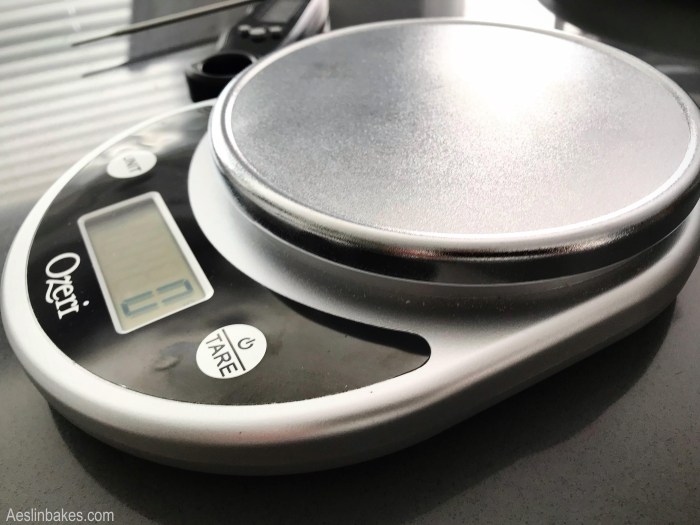
Use a scale. (Or get one!)
- While I sometimes find using volume measures more convenient, weight measures will give more accurate and consistent results. So if you bake regularly, you really should get a scale. (Preferably one that reads ounces and grams.)

Make sure your yeast is active.
– Yeast must be active for bread to rise. You know your yeast is alive and active if it becomes foamy when dissolved in warm water between 100°F (38°C) and 110°F (49°C) with the barley malt syrup stirred in.
- If the yeast doesn’t become foamy within 10 minutes, throw it out and try again.
- After your yeast has been activated, don’t let it sit too long or else the yeast will be less effective.

2) MAKING AND ADDING THE YUDANE:
Make your yudane the day before.
– Making yudane takes really no time at all. It’s just mixing boiling water and flour. That’s it. It’s definitely not traditional in bagels, but this little extra step in the recipe will delay the staling, drying and hardening of your bagels, preserving texture and flavor.


- You can actually use the yudane after just 4 hours. This gives the flour enough time to absorb the water and gelatinize, which helps your dough retain moisture for softness and a longer shelf life. But you will miss out on the benefits of time. The longer you wait, up to 24 (or maybe even 48 hours), the more flavor and texture the yudane will develop and then pass along to your bagels.
Add the yudane to the shaggy dough.
– The rested yudane will feel stretchy and gummy. Breaking it up into small pieces and adding it after the other ingredients have been mixed into a shaggy dough will help it incorporate much easier and more smoothly.
3) KNEADING THE DOUGH:
Proper kneading is necessary for bagel dough to bake into chewy yet tender, well-shaped bagels. So knead until the dough is smooth, springy and elastic.
THE WINDOWPANE TEST:
- The dough has been properly kneaded when it is smooth and elastic and can be stretched thin enough for light to shine through without tearing – the windowpane test.

IF YOUR DOUGH DIDN’T PASS THE WINDOWPANE TEST:
– If you have kneaded for the allotted time but your dough is not passing the windowpane test, don’t stress.
- Rest your dough for 10 minutes (and up to 30 minutes) then test again. (It’s amazing what a little rest can do for dough’s smoothness and elasticity.)
- If the dough is still not smooth and elastic, knead for 3 minutes and then re-test.
- Repeat, if needed, until the dough passes the windowpane test.
Do not over-knead:
- If you start to feel the dough becoming firm and less stretchy, stop kneading or else you risk over-kneading your dough. Over-kneaded dough will bake up dry, coarse and heavy.
Do not add flour:
- The addition of the yudane will make this bagel dough a little softer and stickier than traditional stiff bagel dough. (Easier on your mixer!) This is how it should be, so do not add any extra flour.
4) SHAPING THE BAGELS:
– The easiest way to shape bagels is to poke a hole in the center of a dough ball and then gently stretch it out. Flour your hands as needed to overcome any stickiness and try not to break or tear the smooth surface.
– Shape the bagels after the cold, overnight rise.
- Many recipes call for shaping the bagels before the long, cold rise. But I find it much easier to shape the bagels after the overnight refrigeration for 2 reasons, mainly: 1) This helps to avoid any possible over-proofing of the shaped bagels which can cause your bagels to deflate during boiling or flatten out during baking, and 2) I don’t always have room for a large baking sheet in my refrigerator.


– The shaped dough will still be a bit elastic so be sure to make the hole large (aim for at least 2 inches) to accommodate any shrinking back.
- Gently re-stretch the bagel before boiling if the hole has shrunk.


5) BOILING THE BAGELS:
A unique and important step in bagel-making to create its characteristic chewy texture and subtly sweet flavor is boiling.
– Boiling sets the bagels’ crust and creates their chewy texture.
– Barley malt syrup in the poaching liquid gives bagels sweetness and color and adds that distinct flavor that makes bagels taste like bagels.
- Barley malt syrup can be ordered online. But if you cannot get hold of any, you can substitute it with molasses, honey or brown sugar.

– A little baking soda in the water helps with the bagels’ browning during baking, too.


– Boil about 1 minute per side. Be gentle when flipping the bagels. (I like to use a wooden spoon along with the slotted spoon.)
- The bagels may look a little deflated or wrinkled after boiling, but then should plump while baking.
– Dredge still-wet bagels in dry toppings (like sesame seeds). The wetness from boiling the bagels will be enough to make the toppings stick. No egg wash should be needed. (Use a wooden spoon to flip the hot, just-boiled bagel onto the slotted spoon for transport if too hot for fingers.)
6) BAKING TIMES VARY. (GET AN INSTANT-READ THERMOMETER!)
– Ovens vary, so the baking times given are just estimates. It may take more or less time for your bagels to bake, so it’s good to check early and check often.
- An instant-read thermometer is a reliable way to check for doneness.
- Bagels are done baking when the internal temperature reaches 195°F (91°C).

– When done, the bagels should be deep golden brown on top and on the bottom.
7) STORING & REHEATING BAGELS:
Storing:
– The use of yudane will delay the staling, drying and hardening of your bagels. But when it comes to prolonging the life of your bagels, nothing substitutes storing your bagels properly.
- Wrap and store your uneaten bagels as soon as possible.
- Better yet, freeze your uneaten bagels as soon as possible. Freezing seems to stop time and your bagel will taste as fresh as the day you froze it.
(Click here to get back to the instructions for storing bagels.)
Reheating & toasting:
– When reheating or toasting your bagels, heating them up whole is the best way to bring them back to how they were fresh out of the oven – crisp and chewy on the outside, warm and tender on the inside. Slice them in half if you want crisp bagels throughout.
- If it has been more than a few days and your bagels are starting to feel a little dry, sprinkle a little water on them first. That will not only soften the bagel a bit, it will also crisp the crust nicely. If it has been longer than that, sprinkle some water and wrap the bagel in foil, as well.
(Click here to get back to the instructions for reheating / toasting bagels.)
*****

*****
RELATED RECIPES
Banh Mi (Vietnamese Baguettes – Tangzhong)

Soft & Chewy Pita Bread (Tangzhong)

Soft & Delicious Japanese Milk Bread (Tangzhong)

Click HERE for more BREADS recipes!
–
–
–