

Soft and Airy Pandesal are fluffy little Filipino bread rolls. They are light, tender and a little bit sweet. They are a Filipino staple, much-loved and enjoyed at any time of day.


What makes these pandesal extra soft and tender is tangzhong. Tangzhong is a cooked slurry of flour and water often used in soft Asian breads (like Japanese Milk Bread) and is the special ingredient that will make these pandesal softer, airier and will keep them fresher longer.
For some helpful tips before you begin, click here. (Recommended)
INGREDIENTS:
For the tangzhong:
- 1/2 cup (120 ml) water
- 3 1/2 tablespoons (28 g) all-purpose flour
For the dough:
- 1 cup (240 ml) half & half
- 1 tablespoon (12 g) plus 1/2 cup (100 g) granulated sugar, divided
- 2 1/4 teaspoons (7 g) active dry yeast
- 4 1/4 cups (532 g) all-purpose flour
- 1/4 cup (35 g) full-fat milk powder
- 2 teaspoons (12 g) fine salt
- 2 large eggs
- 1/4 cup (56 g) unsalted butter, softened
- 1/2 cup (50 g) fine bread crumbs
DIRECTIONS:
1. Make the tangzhong.
– In a small pan, over medium heat, combine the water and flour for the tangzhong.
– Whisk until thick like pudding, maybe 3 or 4 minutes.
– Pour into a small bowl and refrigerate to cool while gathering the remaining ingredients.
2. Activate the yeast.
– Warm 1 cup (240 ml) half & half to about 110°F (49°C).
– Whisk together the warm half & half, 1 tablespoon (12 g) sugar and the yeast.
– Let sit for about 5 to 10 minutes, until foamy.
3. Combine the ingredients.
– In the bowl of a standing mixer, briefly whisk together the flour, milk powder, salt and the remaining sugar.
– Add in the cooled tangzhong, the foamy yeast mixture and the eggs
– Mix with a wooden spoon until the flour is absorbed and a shaggy dough is formed.
4. Knead the dough until smooth and elastic.
– With the paddle attachment, knead the dough on medium-high speed (setting #4) for 7 to 10 minutes, until the dough pulls away from the sides and bottom of the bowl and gathers in the center. The dough will be a bit sticky, but should also be smooth, springy and elastic enough to stretch thin without tearing. (See TIPS)
5. Knead in the butter.
– Switch to the dough hook attachment. Then add in the butter two tablespoons at a time and knead on low speed, making sure each addition of butter is fully incorporated before adding the next.
– Stop and scrape down the dough hook and the sides of the mixer as needed.
– After all the butter is incorporated, increase speed to medium-high (setting #4) and knead for another 5 minutes. The dough should be smooth and glossy.
6. Let the dough rise for 1 to 2 hours (until double in size).
– Scrape the dough into a large, lightly greased bowl.
– With lightly greased fingers, pull up the sides of the dough and fold into the center. Do this a few times to gather the dough into a ball.
– Flip the dough ball so now the top is smooth and greased.
– Cover the dough with plastic wrap and let rise for about 1 to 2 hours or until double in size.
7. Prepare the baking sheet; Shape the dough.
– Prepare a 18×13 half-sheet baking pan by lining it with parchment paper.
– Remove the dough onto a lightly floured surface. The dough will be soft, but workable.
– Divide into 24 even pieces. (They will be about 50 g each.)
– Shape each piece of dough into a smooth ball. Lightly flour hands as needed.
– Roll the top half of the dough ball in the breadcrumbs.
– Place the rolls in the prepared pan about an inch apart.
8. Let the pandesal rise for 1 hour or until puffed; Preheat the oven to 350°F (176°C).
– Cover the dough loosely with plastic wrap and a kitchen towel.
– Let rest and rise for about 60 to 90 minutes, or until the pandesal are about double in volume and puffed. If you lightly poke the dough, it should spring back about half-way. (See TIPS)
- It may take longer if your dough was refrigerated.
– Meanwhile, preheat the oven to 350°F (176°C). (Expect the oven to take about 30 minutes to preheat.)
9. Bake for 15 to 17 minutes until golden brown.
– Before the dough is finished rising, make sure the oven has been preheated to 350°F (176°C).
– Bake for 15 to 17 minutes or until the tops are a deep golden brown. The internal temperature will be 190°F (87°C).
– Tent with foil if the tops of the pandesal are browning too fast.
– Remove from oven to a cooling rack.
TO STORE:
– Store cooled pandesal in an air-tight container at room temperature.
To FREEZE:
- Wrap the pandesal individually in plastic wrap.
- Freeze in a single-layer for about 15 minutes.
- Place the partially frozen pandesal in a Ziploc freezer bag.
- Freeze up to a month or two.


TO REHEAT:
– Preheat the oven to 400°F (204°C). Place the oven rack in the center or upper-center position.
– Wrap the pandesal single-layer in foil.
– Heat for 5 to 10 minutes.
IF FROZEN:
– Do NOT thaw.
– Preheat the oven to 400°F (204°C). Place the oven rack in the center or upper-center position.
– Remove any plastic wrap from the pandesal.
– Wrap the frozen pandesal single-layer in foil.
– Heat for 15 to 20 minutes until soft and warm.


*****

ABOUT THIS RECIPE
Pandesal is THE bread of the Philippines. These fluffy little rolls are enjoyed at any time of the day with just about anything sweet or savory. They are tender, light and a little sweet. And the use of tangzhong makes these pandesal wonderfully soft and airy.
Tangzhong is a cooked slurry of flour and water often used in soft Asian breads such as Japanese Milk Bread. Tangzhong helps bread retain moisture, making it lighter, softer and fresher for longer.


For a special treat, try replacing the butter in this recipe with brown butter. See my page on Brown Butter.
TIPS:
Here are 6 helpful tips:
– A few points to make sure your dough turns our right every time:
1) Starting your dough:
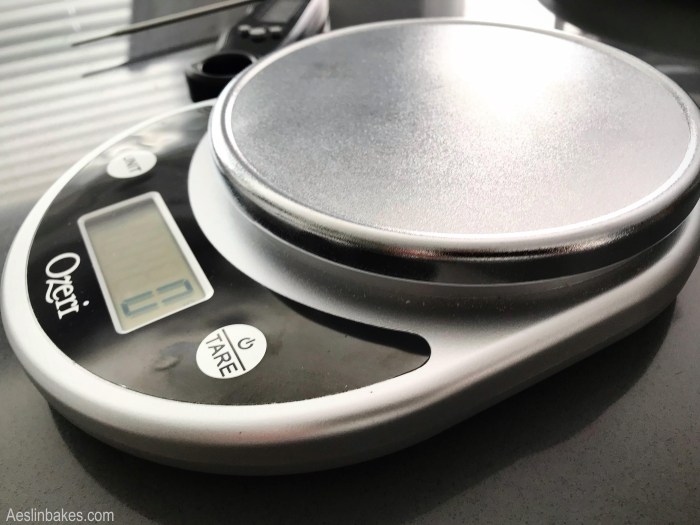
Use a scale, if you have one.
– While I sometimes find using volume measures more convenient, in baking, weight measures will give more accurate and consistent results. So if you bake regularly, you really should get a scale. (Preferably one that reads ounces and grams.)

Cool the tangzhong.
– Make sure your tangzhong is cool. If your tangzhong is still too hot when used, it may kill the yeast.

Soften the butter.
– Butter will incorporate into the dough best when softened. Allow cold butter to sit out for at least 30 minutes to soften, or until you can press it with your finger and it will give beneath light pressure.
– To speed up softening butter, I usually cut my cold butter into thin pats or small cubes. Then after a few minutes, I mash the butter with the flat side of a knife or the back of a spoon until it becomes smooth and spreadable.


Make sure your yeast is active.
– Yeast must be active for bread to rise. You know your yeast is alive and active if it becomes foamy when dissolved in warm milk with a little sugar.

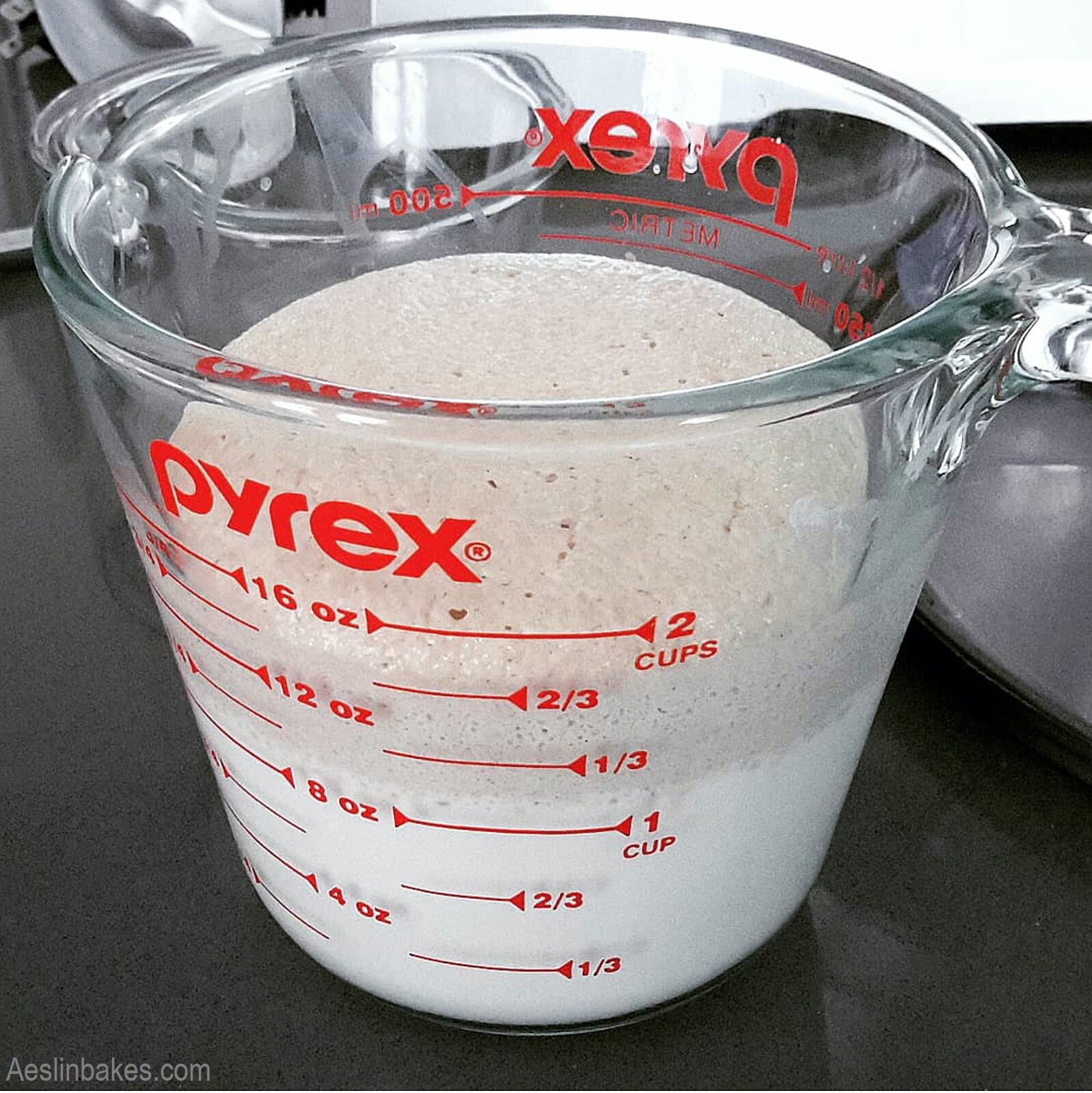
– Use warm milk between 100°F (38°C) and 110°F (49°C). If the yeast doesn’t become foamy within 5 to 10 minutes, throw it out and try again.
– Do not leave the activated yeast too long or else it will not be as effective.
2) Kneading your dough:
KNEAD until smooth and stretchy:
– Proper kneading is necessary to give the dough enough structure to cook up into soft, light, well-shaped buns.
- The dough, when properly kneaded, will still be sticky and soft, but will also be smooth and elastic. The dough should be able to be stretched until almost translucent without breaking or tearing (the “windowpane” test).


Because this is a soft and sticky dough, you may be very tempted to add flour, but DON’T add any. A soft, sticky dough is what will become soft, light and airy pandesal.
If your dough didn’t pass the windowpane test:
– If you have kneaded for the allotted time but your dough is not passing the windowpane test, don’t stress:
- Rest your dough for 10 minutes (and up to 30 minutes) then test again. (It’s amazing what a little rest can do for dough’s smoothness and elasticity.)
- If the dough is still not smooth and elastic, knead for 3 minutes and then re-test.
- Repeat, if needed, until the dough passes the windowpane test.
Do not over-knead:
- If you start to feel the dough becoming firm and less stretchy, stop kneading or else you risk over-kneading your dough. Over-kneaded dough will become dry and dense bread with a hard crust.
3) If you’re kneading by hand: (If not, SKIP)
– I think kneading this dough by hand is tricky. It can be very soft, sticky and messy. Especially when kneading in the butter. I really recommend using a mixer. But if you don’t have access to a mixer or choose not to use one, here’s one way to knead your sticky dough:
The French Knead (aka Slap and Fold method)
- Mix the shaggy dough with a pastry scraper to ensure there are no dry spots of flour. Cover with plastic wrap and let the dough rest for about 20 to 30 minutes to let the flour absorb some of the moisture.
- After resting, bring the dough together a bit by mixing it with a pastry scraper before scraping it out onto a clean, smooth counter.
- Using fingertips, pick up the top half of the dough, lift the entire mass and then slap the hanging end of the dough onto the counter, letting it stick and anchor itself. In one motion, stretch the dough toward you and then fold it over on itself.
- Next pick up the dough from the left side, lift, slap, stretch and fold. Do it again, picking up the dough from the left. (This will rotate the dough for even kneading.)
- Repeat the process, taking breaks occasionally to clean up the counter with a pastry scraper.
- The dough will be sticky and all over the place at first. That’s OK. Don’t add flour, water or oil in an attempt to conquer the stickiness. Just keep going and the dough will come together eventually.
- Knead until the dough passes the windowpane test. The dough will still be sticky, but should be manageable. It should also be smooth and elastic.
Some tips:
– Pick up the dough with fingertips. The less full-handed contact, the easier it will be.
– Clean off the countertop occasionally with a pastry scraper. The cleaner your surface, the smoother the process will go.
– Be patient. The dough will be everywhere for awhile. Just keep the rhythm going even if everything is sticking together. Eventually the dough will stick more to itself and less to the countertop or your fingers.
Feel free to take breaks.
Bread dough continues to build structure (gluten) even while resting. So feel free to take short breaks while kneading. (Be sure to cover your dough with plastic wrap to prevent it from drying out.)
- It takes me about 20 minutes of continuous kneading to reach a smooth windowpane. (Although I have read that others are able to do it in considerably less time.) But I have also gotten beautiful smooth results with a great windowpane by kneading for 5 minutes and resting the dough for 20 minutes and repeating this 3 or 4 times.
– Here’s one of the great videos that I watched to learn the French Knead method:

Kneading in the butter:
I am sure there are many ways to this. This is the way that works for me:
– Mash/poke about a third of the butter into the dough with your fingertips.
– Pull up the sides of the dough and fold over the butter, pressing firmly into the center with your fingertips or knuckles.
– Continue going round the dough pulling up the sides and folding/pressing into the center until the butter is fully incorporated before adding in the next bit of butter. Use a pastry scrape to bring back any butter oozing out onto the counter.
– After all the butter has been incorporated into the dough, knead for 5 to 8 minutes, until the dough is completely smooth.
- This may take some time and be messy at first. But be patient and continue to knead in the butter until the dough is smooth, homogeneous and glossy.
- Incorporate the butter a bit at a time. This will not only be easier, it will actually take less time to get the job done than trying to knead in all the butter at once.
4) You can refrigerate your dough overnight.
– After kneading, if you wish, you can let your dough rise in the refrigerator overnight and as long as 2 days. However, any longer than that and your dough may start to smell and taste “yeasty”.
- You will need to punch it down at least once. After punching down, reshape the dough into a ball by pulling up the sides and folding it into the center. Flip the dough so that the top is smooth and greased.
5) When are the pandesal ready for baking?
The pandesal are ready for baking when:
- They are about double in volume.
- They are puffed. If you lightly poke the dough, it should spring back about half-way.


- It may take longer if your dough was refrigerated.
6) Baking times can vary. (Get an instant-read thermometer!)
– Ovens vary, so the baking times given are just estimates. It may take more or less time for your bread to bake. When you can start to smell the pandesal from across the room, it is a good time to start checking.

- Instant-read thermometers are the most reliable way to check for doneness.
- Bread is done baking when the internal temperature reaches 190°F (88°C).

*****

–
Related Recipes
Soft and Fluffy Wool Roll Bread (Tangzhong)


–
Japanese Milk Bread

Bazlama


Click HERE for more BREAD recipes!
–
–
–
–
–
Ads